She Started a Mobile Bar With a Folding Table. Now She Books 70+ Events a Year.

Founder of Royal Bee Bartending, a mobile bar and events company serving New Hampshire and Maine. She books 70+ events a year, has franchised the business, and teaches other operators how to start their own mobile bars.
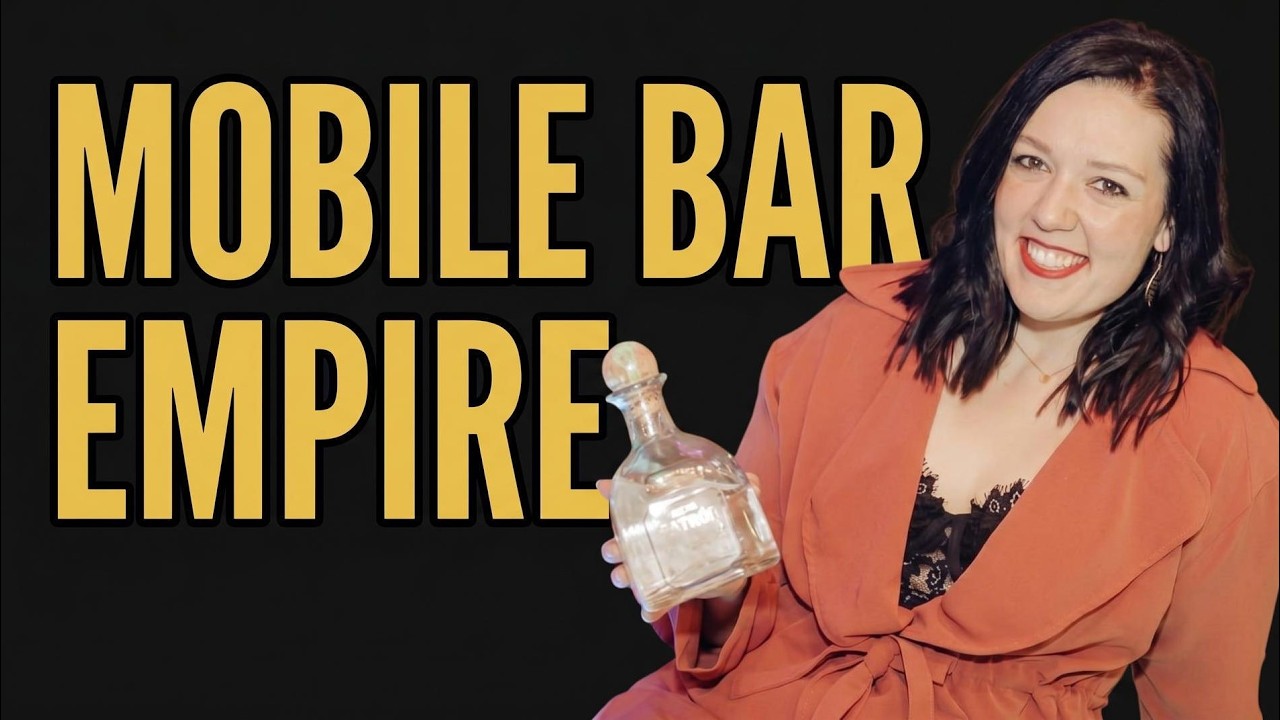
Shelby Lee Bellen was making $500 a week as a sales director at a nonprofit when the organization decided to start bartending weddings at its event space. Nobody on staff knew how to bartend. They did it anyway.
She walked out of one night of bartending with more money than she made all week at her desk.
That was the crack in the wall. She went home, sat down with Google, and typed something like: do people travel to events and just bartend? They do. And the companies doing it in New Hampshire were charging a thousand dollars a night to show up with nothing. The client provided the ice. The client provided the garnish.
“It’s a thousand dollars just for us to show up and bartend, and I was like, what? This is so ridiculous to me.”
She gave her notice. She does not recommend that part.
The folding table
Royal Bee Bartending started with $260, a folding table from Target, and photos from her own wedding as the portfolio. Her first real booking was a 180-person wedding, sold with no experience and no gear.
The bar came later. So did the custom VW Beetle tap vehicle. The order matters, because it is backwards from how most people plan a mobile bar business: they price the trailer first and figure out the service second.
About half the venues she works already have a bar built into the space. She is just bartending in theirs. That is the whole argument for treating the bar as a rental add-on instead of the core product.
Where the math comes from
Shelby’s least favorite conversation in the industry goes like this. She asks an operator what they charge. They tell her. She asks where the math is that supports it. They say another mobile bar company charges that.
“But you don’t know what your profit margins are, like, at all.”
She runs a profit spreadsheet instead. Everything going into a package gets typed in, and the sheet is built to charge the client double what she pays. Two dollars of limes bills at four.
The mistake she sees most often is not a markup problem. It is that operators leave themselves off the sheet entirely:
“One thing I think that people do wrong all the time in this industry is they genuinely do not consider their time as an expense in their business. So when they want to scale their company, they have no way to pay someone else to do the work that they’ve been doing.”
That lands her around a 40% margin on the service, plus a gratuity layer that is not optional.
The $250 gratuity minimum
She requires $250 in gratuity per bartender, per event. $500 for a two-bartender team.
She did not come up with it, and she is quick to correct the assumption that she did. A mentor running nine weddings every Saturday told her to add it. Her reaction at the time was that it was crazy and she would never do that.
Then she started sending teams to events where they left with $30. Not every time. Rarely, even. But often enough that she started doing the math on whether she would have staff at all next season.
Now a bartender working a Royal Bee event knows the floor before they accept the shift. Her hiring problem went away.
One package, not three
No bronze, silver, gold.
“I’ve always been an advocate for one package all the time and then upsells. That’s where you make your money.”
The base includes tables, cups, straws, napkins, garnish, and a basic bar setup. Mixers are an add-on. Ice is an add-on. And she has a specific complaint about operators who charge more for cocktails than for beer and wine: you are a bartender, that is the job.
Worth noting that Shelby runs dry hire, so not charging extra for cocktails costs her nothing. If you buy the spirits, a cocktail tier is cost recovery rather than a surcharge.
The license question
The reason most mobile bars start as labor-only is legal, not strategic. In almost every state, if the client provides the alcohol and you are not charging for it, you do not need a liquor license. You add a liquor liability policy on top of your general policy.
Check your own state before you take her word or ours for it.
Where to go next
If you are trying to work out what to actually charge, we built a pricing guide from 48 mobile bar businesses on Flashquotes and more than 600 booked quotes: Mobile Bar Pricing: The 3 Models Top Operators Actually Use.
And if you want to talk this through with people running the same business, Mobile Business School is free.
Resources Mentioned
- Royal Bee Bartending — Shelby's mobile bar and events company in New Hampshire and Maine
- Shelby on Instagram — Where she documents the whole build in public
- Shelby on TikTok — The account behind the 2-million-view video
- The Saboteur Assessment — The free mindset tool Shelby uses with her coaching clients
- Mobile Bar Pricing: The 3 Models Top Operators Actually Use — Our pricing guide built from 48 bar businesses and 600+ booked quotes
Key Takeaways from This Episode
Price from a spreadsheet, not from a competitor
Shelby asks other operators what they charge, then asks where the math is. Most people are copying a competitor and have no idea what their margins are. She builds every package from a cost sheet and charges double what she pays.
Your own time is an expense
The most common mistake she sees: operators leave their own labor off the cost sheet. That works until you want to scale, and then you cannot afford to pay anyone to do the job you have been doing for free.
A $250 gratuity minimum per bartender
She did not invent it. A mentor doing nine weddings a Saturday told her to add it after her staff kept walking away from events with $30. It is a staffing retention tool first and a revenue tool second.
One package, then upsells
No bronze, silver, gold. One core offering with tables, cups, straws, napkins, garnish, and a basic bar setup. Mixers, ice, and everything else are add-ons. That is where the money is.
Client-supplied alcohol is the legal unlock
In almost every state, if the client buys the liquor and you are not charging for it, you do not need a liquor license. Add liquor liability on top of your general policy and check your own state.
Half the venues already have a bar
Which is why the bar itself is a rental add-on, not the core product. You are selling labor and know-how, and a folding table is enough to start.